Related knowledge, adoption, and exposure to change
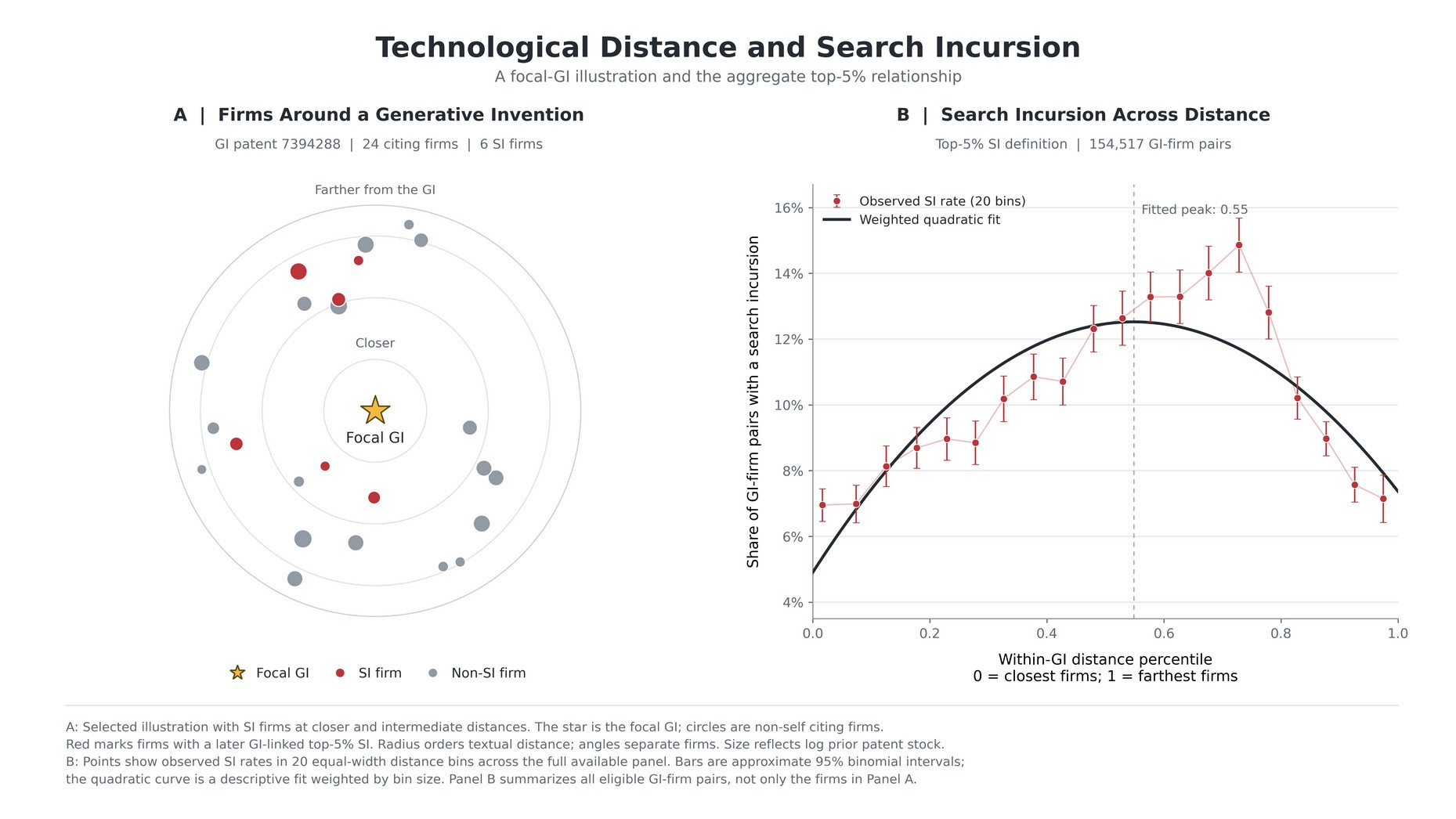
Technological proximity can help a firm recognize and use a generative invention. High proximity may also mean that adoption implicates more of the firm's existing knowledge, products, and commitments. My job-market paper examines these opposing effects on search incursion.
Related research
Job market paper
Generative Inventions and Search Incursions: Technological Proximity and the Nature of Follow-On Inventive Activity
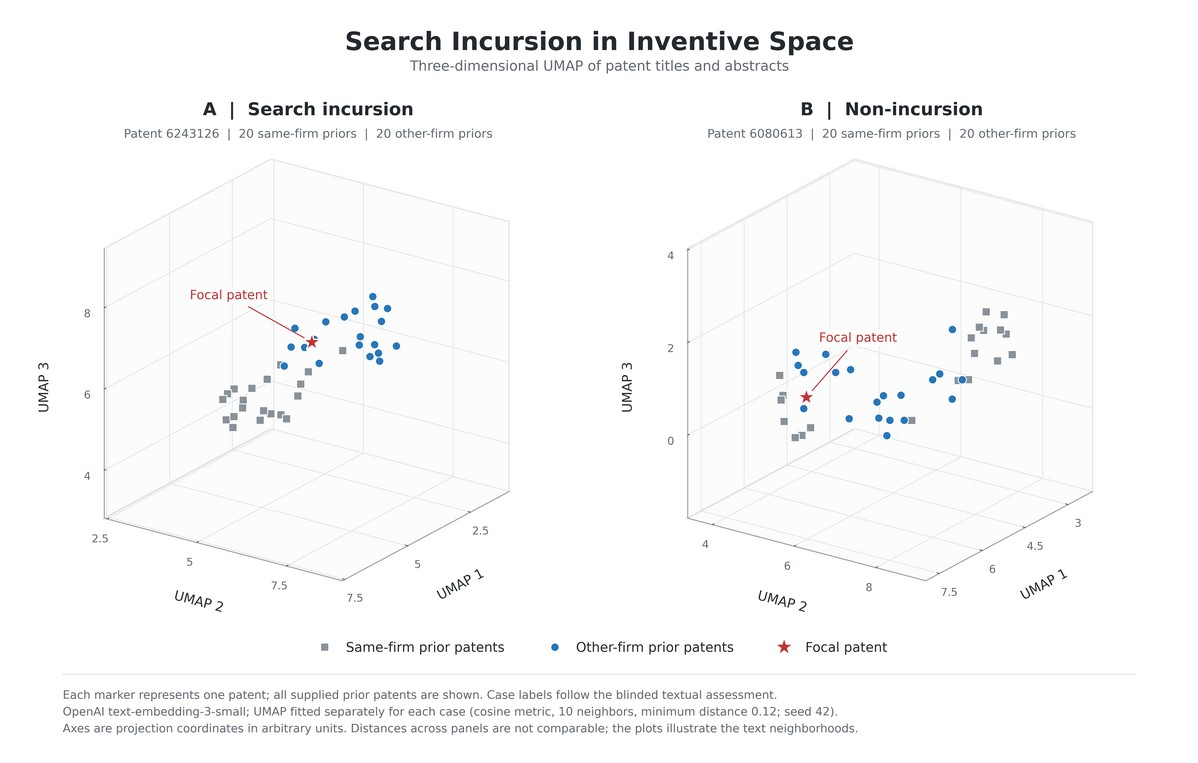
How do firms use technological breakthroughs to move beyond their own inventive experience and toward areas of strength for other firms?
Summary
We examine inventive search through which firms move beyond their own prior inventive activity and toward knowledge domains more closely associated with other firms. We call this movement search incursion. Generative inventions make previously infeasible combinations of knowledge possible and can weaken the conditions protecting other firms' advantages. Technological proximity shapes both a firm's ability to use an invention and its exposure to the changes that adoption requires. Using patent data, we examine how the likelihood of search incursion varies with technological proximity and the structure of the firm's knowledge base.